
The Costa del Sol Property Market
The Costa del Sol has one of the most active property markets in Spain. Buyers come from many countries, so demand does not depend on one economy alone. Prices have held up well over the long term, and prime spots like Marbella have limited land left for new build. This guide explains how the market works in plain terms. You will learn the difference between new-build and resale property, how off-plan buying works, and what the main property types cost. We also cover who is buying and the basic steps to complete a purchase safely.
Property types on the coast

Apartments
The most common option and the easiest way in, from compact flats to large ones.
View
Penthouses
Top-floor homes with big terraces and the best views, at a clear premium.
View
Townhouses
More space over two or three floors, popular with families and often gated.
View
Villas
Detached, with garden and pool, from modern new-builds to classic Mediterranean.
View
Plots to build
Buy land and build your own villa, mostly in the hills and the prime areas.
ViewThe market in brief
The Costa del Sol runs along the coast of Malaga province in southern Spain. It has a large international buyer base. British, German, Scandinavian, Dutch, Belgian, and a growing number of US and Middle Eastern buyers all buy here. Because demand comes from many countries, the market has been fairly resilient over time.
Prime areas such as Marbella and Sotogrande have little land left for new build. When supply is tight and demand stays strong, prices in these spots tend to stay high. Areas a little further out, like Estepona, Mijas, and Fuengirola, still offer more new stock and lower entry prices.
The most active part of the market is the sub-€600.000 segment. Well-priced new-build and modern resale property in this range sell quickly. Very high-end resale property above €3 million can sit on the market for longer.
- International demand from many countries, not one alone
- Limited new-build land in Marbella and Sotogrande
- The strongest activity is in the sub-€600.000 range
Who is buying
The buyer base here is genuinely international, which is one reason the market holds up. British buyers have long been the largest single group, but they are far from alone. Scandinavian, Belgian, Dutch, German and French buyers are all active, and American and Middle Eastern interest has grown quickly in the last few years.

How prices have moved
Prices on the coast have risen strongly over the past decade, led by prime areas like Marbella, the Golden Mile and Sotogrande where new supply is limited. New launches in Estepona, Mijas and the western coast have added stock at lower entry points.
Property is not a one-way bet and the market moves in cycles, but the long-term trend has been up, supported by steady foreign demand and a shortage of prime land.
- Prime areas have seen the biggest gains
- Limited new-build land in Marbella and Sotogrande
- Newer, lower-priced stock in Estepona and Mijas
- Long-term trend up, but markets are cyclical
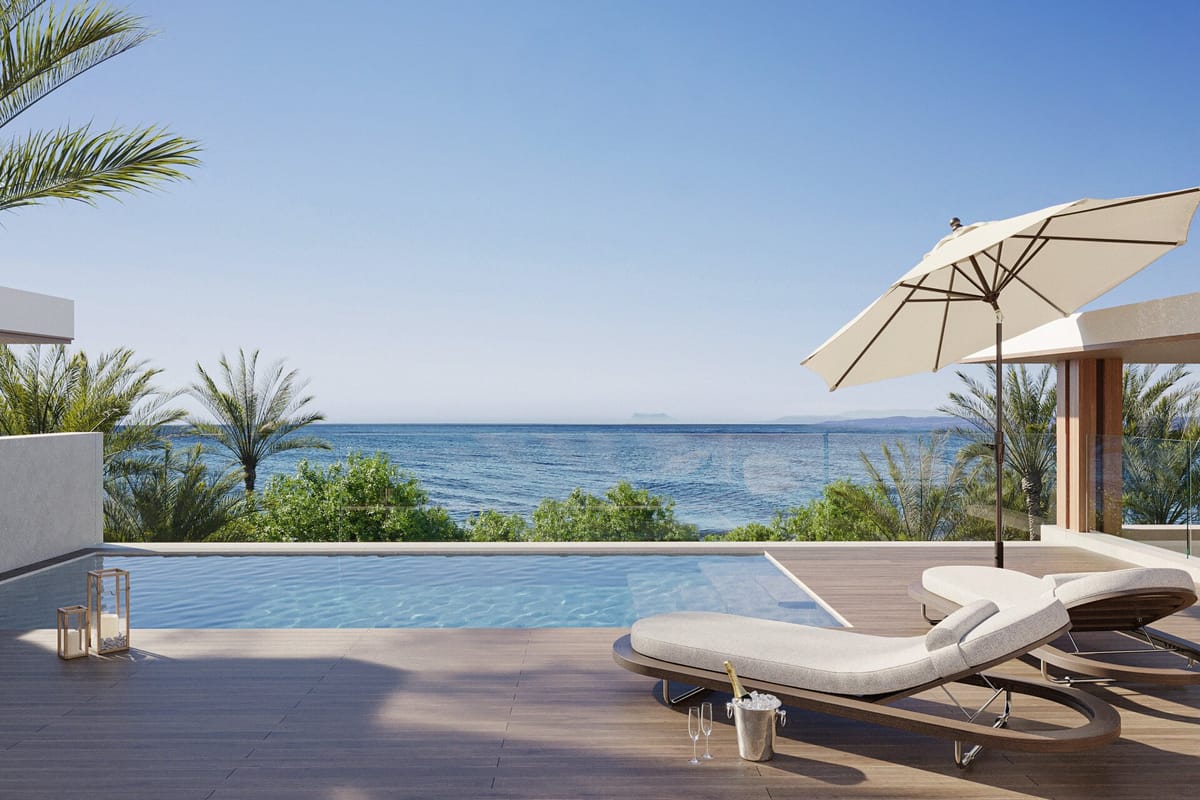
New-build vs resale property
New-build means a property that has not been lived in, often bought directly from a developer. Resale properties means a property that has had an owner before you. Both are common on the Costa del Sol, and each has trade-offs.
New-build gives you modern layouts, better energy ratings, and a fresh finish with warranties. The downside is that you may wait for completion, and the newest stock sits a little inland from the sea. Resale properties lets you see the exact property and often puts you closer to the beach and town, but it can need updating and may cost more to run.
- New-build: modern, efficient, warranties, but you may wait
- Resale properties: see it as it is, prime locations, but can need work
- New-build has higher purchase tax; resale property has transfer tax
Off-plan buying explained
Off-plan means you buy a new-build property before it is finished, sometimes before building starts. Prices can be lower at this early stage, and you can often choose finishes.
The process is simple in outline. You pay a reservation fee to take the property off the market. You then pay the deposit and stage payments as construction reaches agreed points. In Spain, a bank guarantee or insurance must protect the money you pay during construction. If the developer fails to deliver, you can claim that money back. When the property is finished and has its licence, you pay the balance and complete at the notary.
The honest trade-off is time and trust. You wait months or longer, and you rely on the developer to deliver on schedule and to standard. Always confirm the bank guarantee is in place before you pay.
- Reservation fee holds the property
- Stage payments follow the build
- A bank guarantee protects your money by law
- Balance paid at completion, at the notary
Property types and prices
The main property types are apartments, penthouses, townhouses, villas, and building plots. Apartments are the most common and the easiest entry point. Penthouses add larger terraces and views. Townhouses suit families who want more space. Villas are detached, often with a garden and pool. Plots let you build your own villa.

Renting it out
Many buyers rent the property when they are not using it. Short-term holiday rentals earn most in summer and need a tourist licence, which not every property can get. Long-term rentals are steadier and simpler. Rental demand is strong across the coast, which helps cover running costs and, for some, turns the property into an investment.
We cover yields, licences and the honest risks in full on the investment guide.
- Short-term rentals earn most in summer, licence needed
- Long-term rentals are steadier and simpler
- Strong rental demand helps cover running costs
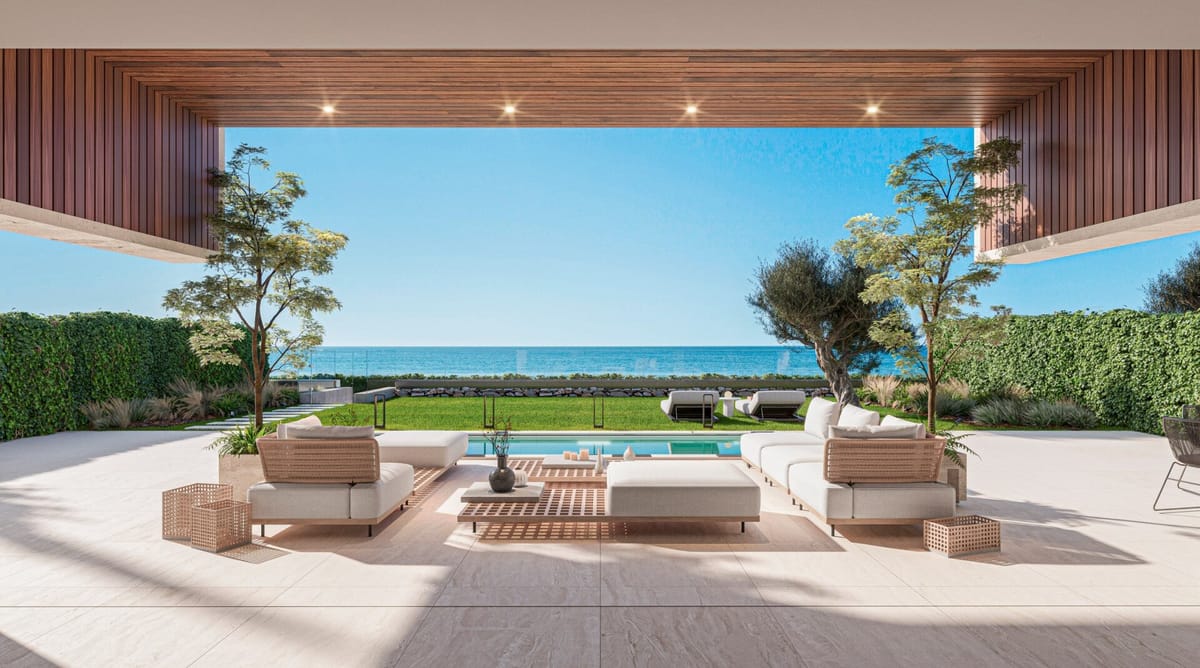
The buying process in short
The steps are the same for most purchases. First you reserve the property with a small fee, which takes it off the market. Then your lawyer runs checks on ownership, debts, licences, and planning.
Next you sign a private deposit contract and pay a deposit, usually around 10 percent. On completion day you sign the title deed before a notary, pay the balance, and receive the keys. You then register the property and pay the taxes.
The most important rule is to use your own independent lawyer. Choose one who does not work for the seller or the developer. Independent legal advice is the best protection you have.
- Reserve the property with a holding fee
- Lawyer checks ownership, debts, and licences
- Sign the deposit contract, usually 10 percent
- Complete at the notary and register the title
Branded residences
The Costa del Sol has become one of the world's leading spots for branded residences: property designed and run in partnership with a fashion or car house. You get the brand's architecture and interiors plus hotel-style service, and the names are rare, so they tend to hold value and rent well. Dolce & Gabbana, Lamborghini, Fendi Casa, Missoni, Versace, Elie Saab, Karl Lagerfeld and more are all now building here, mostly around Marbella, Benahavis and Estepona.
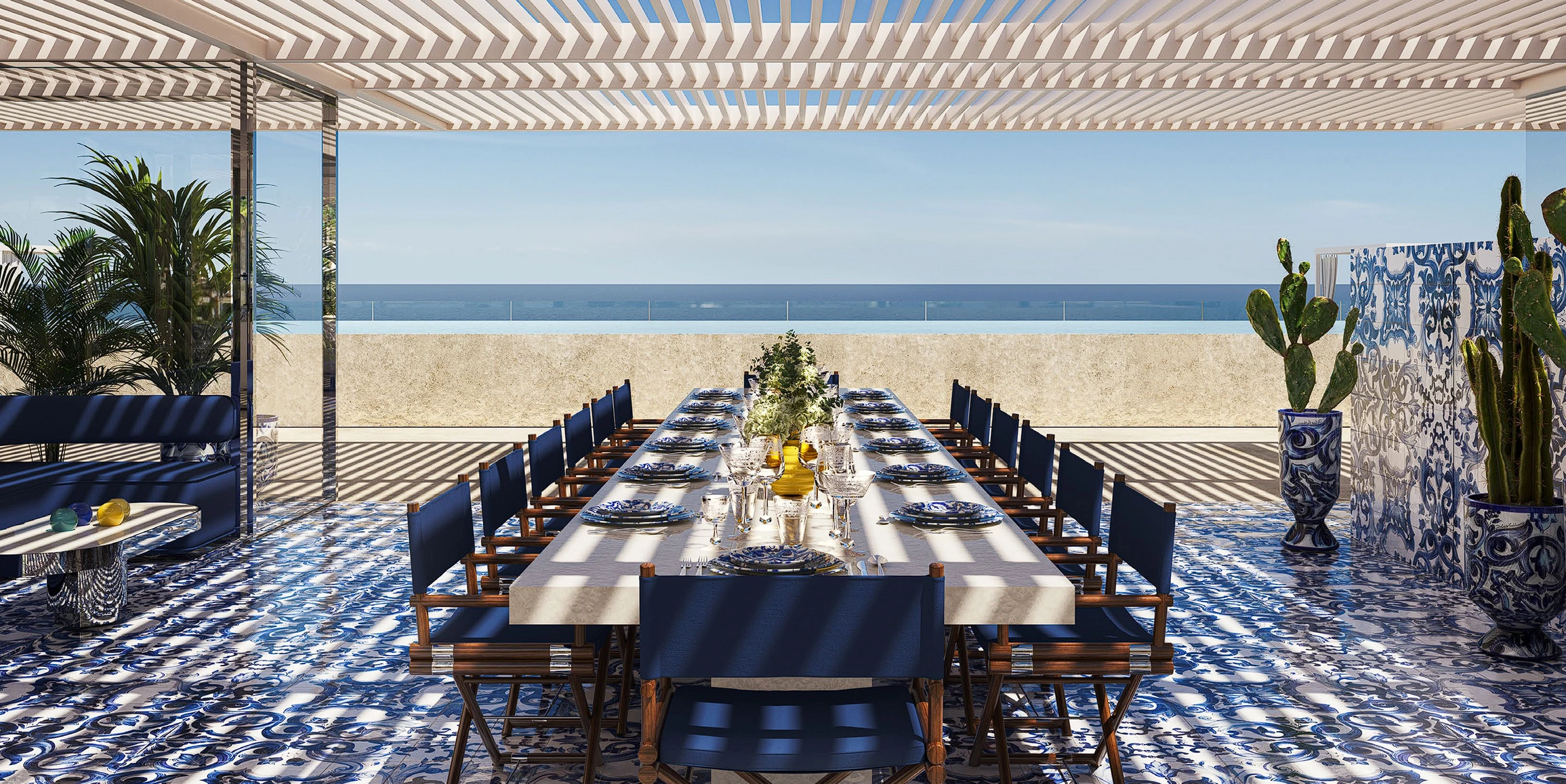
Dolce & Gabbana
Sicilian majolica tiles, deep blue and bold pattern, on a beachfront project near Marbella.
View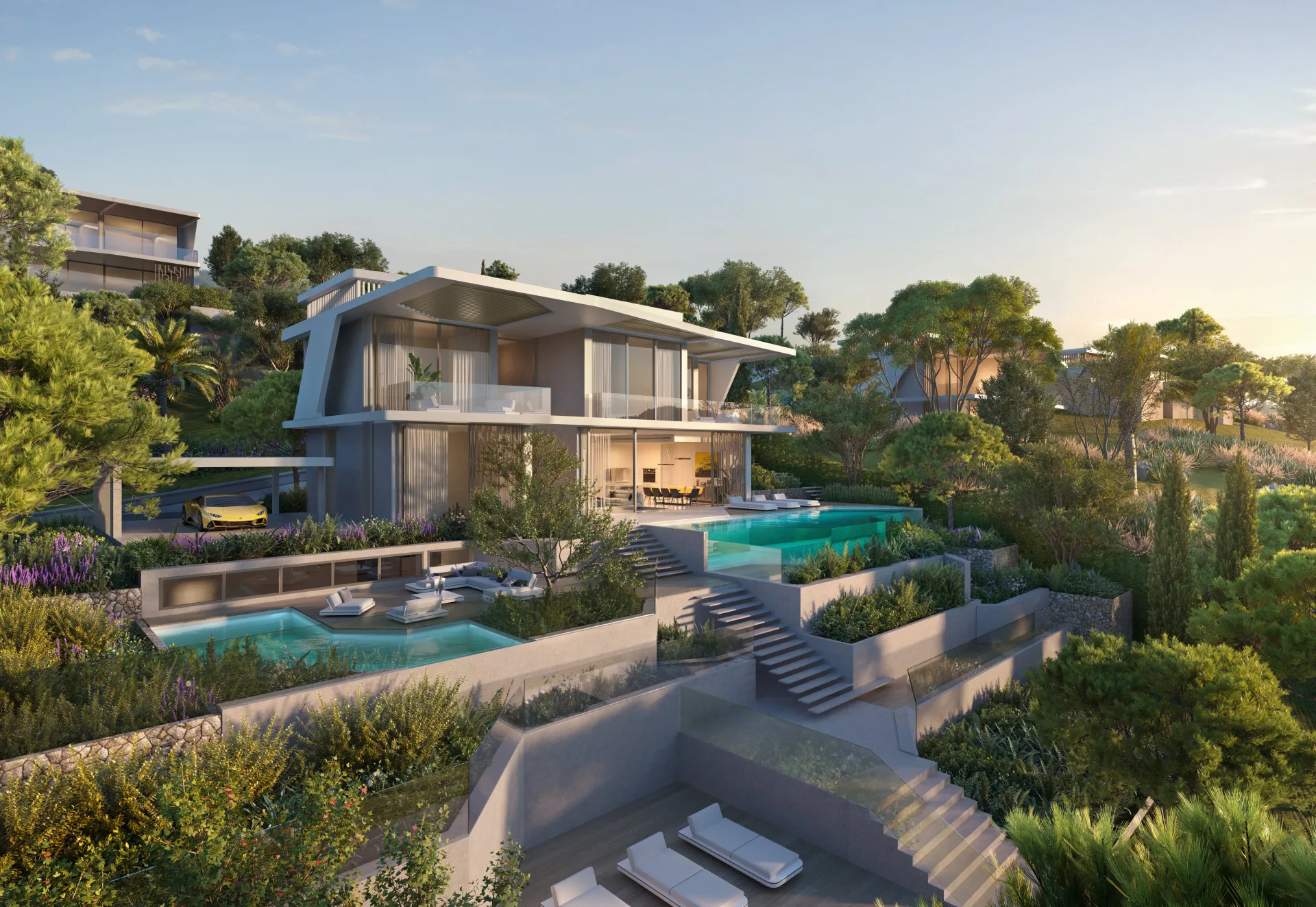
Lamborghini
Tierra Viva in Benahavis: sharp, car-inspired villa design with private pools and clean lines.
View
Armani and beyond
Tailored, understated interiors and resort service, one of many fashion houses now on the coast.
ViewPrices in prime areas like Marbella and Sotogrande are high, and the best-value new stock often sits a little inland. Off-plan can save money, but it means waiting and trusting a developer to deliver. Whatever you buy, always use your own independent lawyer and confirm any bank guarantee before you pay.
Common questions
Is the Costa del Sol a good place to buy property?
It has a broad international buyer base and a strong rental market, which has helped prices hold up over the long term. Prime areas are expensive, so set a clear budget and buy in the area that fits it.
Should I buy new-build or resale property?
New-build gives modern layouts, good energy ratings, and warranties, but you may wait for completion. Resale properties lets you see the exact property and often sits closer to the beach, though it can need updating.
Is off-plan safe?
It can be, as long as the money you pay during construction is protected by a bank guarantee or insurance, which Spanish law requires. Always confirm this is in place before you pay, and have your lawyer check the contract.
How much does a property cost on the Costa del Sol?
As a rough guide, the average is above €3.500 per square metre. Fuengirola and Benalmadena are near €3,300, Estepona around €4,400, and Marbella above €5,000, with frontline areas much higher. These figures are approximate.
Do I need a lawyer to buy in Spain?
You are not legally required to, but you should always use your own independent lawyer. They check ownership, debts, and licences before you commit, which is your best protection in the whole process.


The mechanics, in full detail:
Part of our complete Costa del Sol guide
Back to the Costa del Sol guide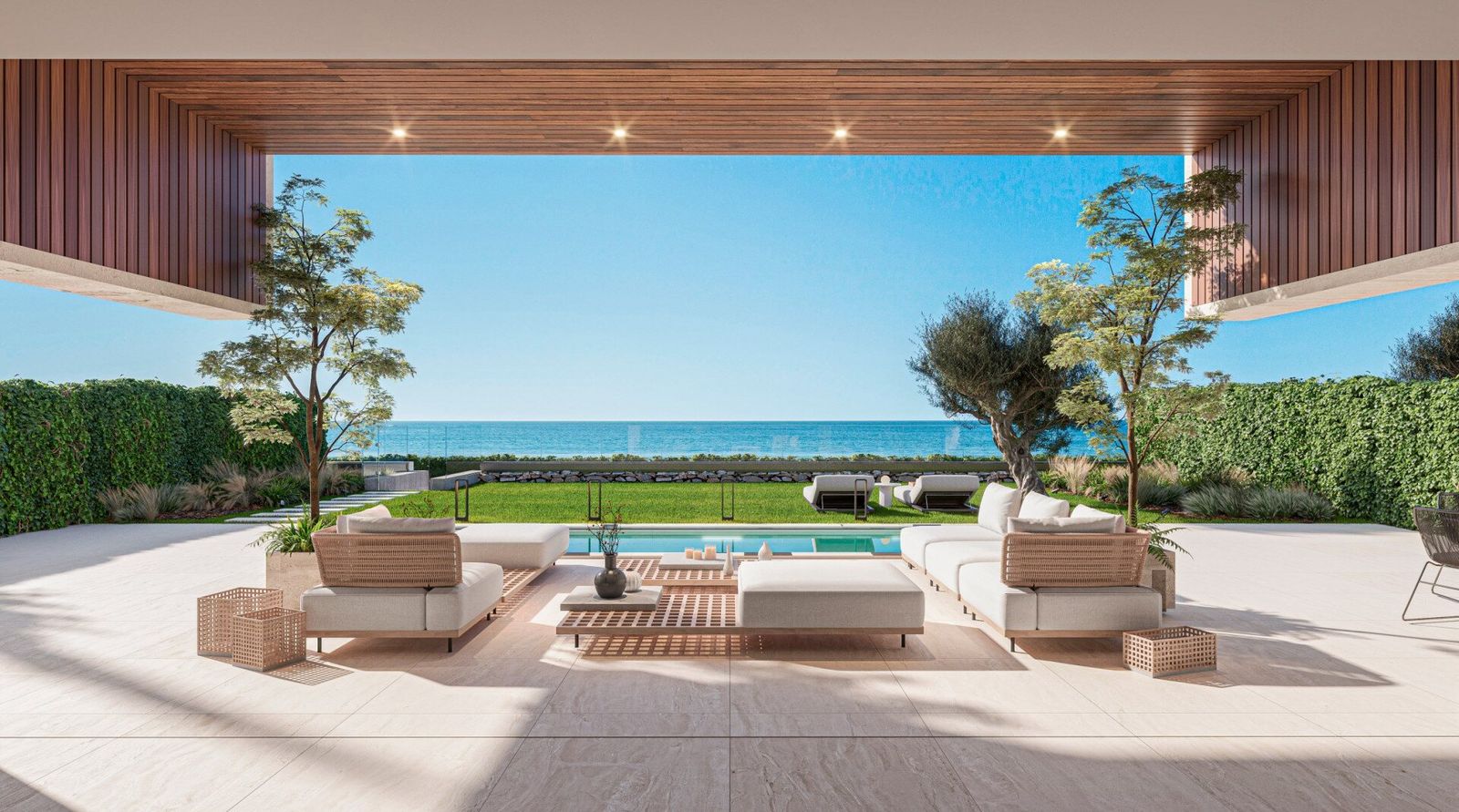
Thinking about a property here?
We are free to use and independent. Tell us what you are looking for, and we will send honest options that fit, with no pressure.